Precision
Exploring how surgical-context visual data can be structured and reviewed with greater spatial, temporal, and procedural clarity.

Aletheia Dynamics™ division · Active
Verifiable surgical-context intelligence
Core product concept: VeriSurg™ Helmet
Powered by: EpistemicOS™
Aletheia Surgical™ and VeriSurg™ Helmet are currently positioned as non-clinical R&D infrastructure and product concepts for surgical-context visual data structuring, procedural replay, simulation, and CXU learning.
They are not intended for diagnosis, treatment, patient monitoring, or intraoperative clinical decision-making.
Surgical environments demand more than technical novelty. They require systems that can be understood, reviewed, trusted, and integrated into highly constrained workflows. Aletheia Surgical™ begins from a non-clinical R&D foundation: building infrastructure for surgical-context data analysis, procedural replay, simulation, and epistemic review.

VeriSurg™ Helmet is the active product concept of Aletheia Surgical™. Powered by EpistemicOS™, VeriSurg™ explores how cranial, visual, and workflow-aware interfaces may support surgical-context research, procedural replay, simulation, and verification-centered learning.
At this stage, VeriSurg™ is framed as non-clinical R&D infrastructure. It is not intended for diagnosis, treatment, patient monitoring, or intraoperative clinical decision-making.
Exploring how surgical-context visual data can be structured and reviewed with greater spatial, temporal, and procedural clarity.
Making system state, source context, replay logic, and analytical claims more legible, inspectable, and auditable.
Studying operating-room constraints including sterile-boundary logic, sealed interface packaging, role separation, timing pressure, and handoff patterns.
Designing R&D infrastructure with awareness of institutional behavior, training burden, procedural repeatability, and high-stakes realities.
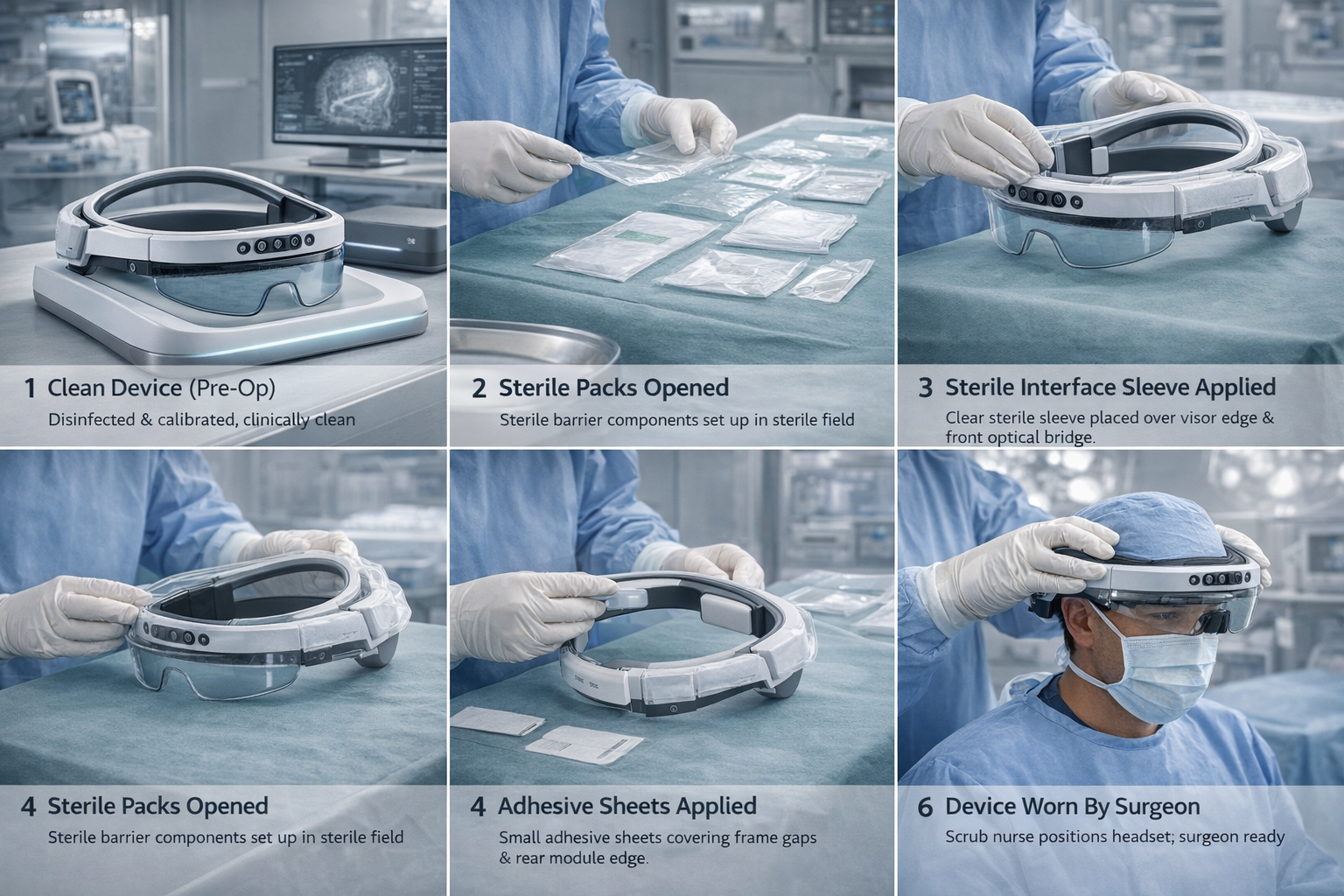
Aletheia Surgical™ treats sterility as workflow architecture, not visual style. For the VeriSurg™ Helmet concept, the head-worn system is positioned as reusable, cleanable, and disinfectable infrastructure, while sterile compatibility is explored through packaged, single-use interface elements that can be opened, applied, and reviewed as part of a procedural setup flow.
This model is intentionally explicit: the reusable device is not presented as a sterile device. The concept focuses on sterile-compatible use logic through interface barriers, sealed packaging, and traceability-aware setup behavior in a non-clinical research-stage context.
Cleanable and disinfectable cranial system infrastructure for research-stage use; not claimed sterile.
Packaged single-use interface elements that define sterile-boundary contact logic.
Sealed presentation and traceability-aware setup flow that supports clear handoff under pressure.
Key distinction
VeriSurg™ is not presented as a fully sterile device. The concept explores sterile-compatible workflow through packaged single-use barriers applied to reusable cleanable hardware, with packaging treated as part of the trust architecture.
Aletheia Surgical™ treats VeriSurg™ as part of a broader research system: surgical-context data structuring, procedural replay and review, simulation-oriented learning workflows, verification state modeling, sterile workflow mapping, failure mode visibility, role clarity, and traceability-oriented system design.
At its most mature conceptual layer, VeriSurg™ is defined not only by form but by behavioral and institutional questions: intended-use boundaries, traceability, labeling logic, verification states, visible setup failures, and adoption-aware interaction design for repeatable research and simulation workflows.
Aletheia Surgical™ represents a translational expression of OmniCortex epistemic work. Where OmniCortex develops verification-first decision architecture, Aletheia Surgical™ applies those principles to surgical-context R&D: visual data structuring, replay, simulation, workflow analysis, and trust-oriented system design before any future clinical claims are made.
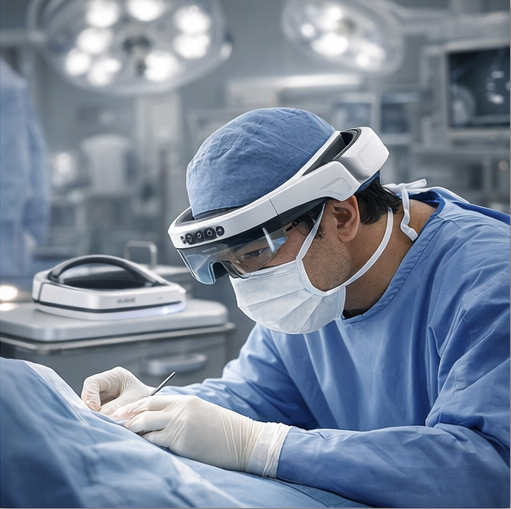
VeriSurg™ Helmet — powered by EpistemicOS©
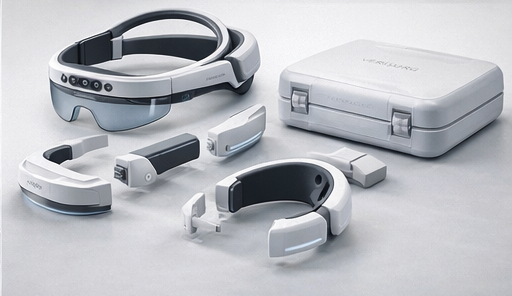
Aletheia Surgical™ system concept: precision, verification, and adoption-aware design
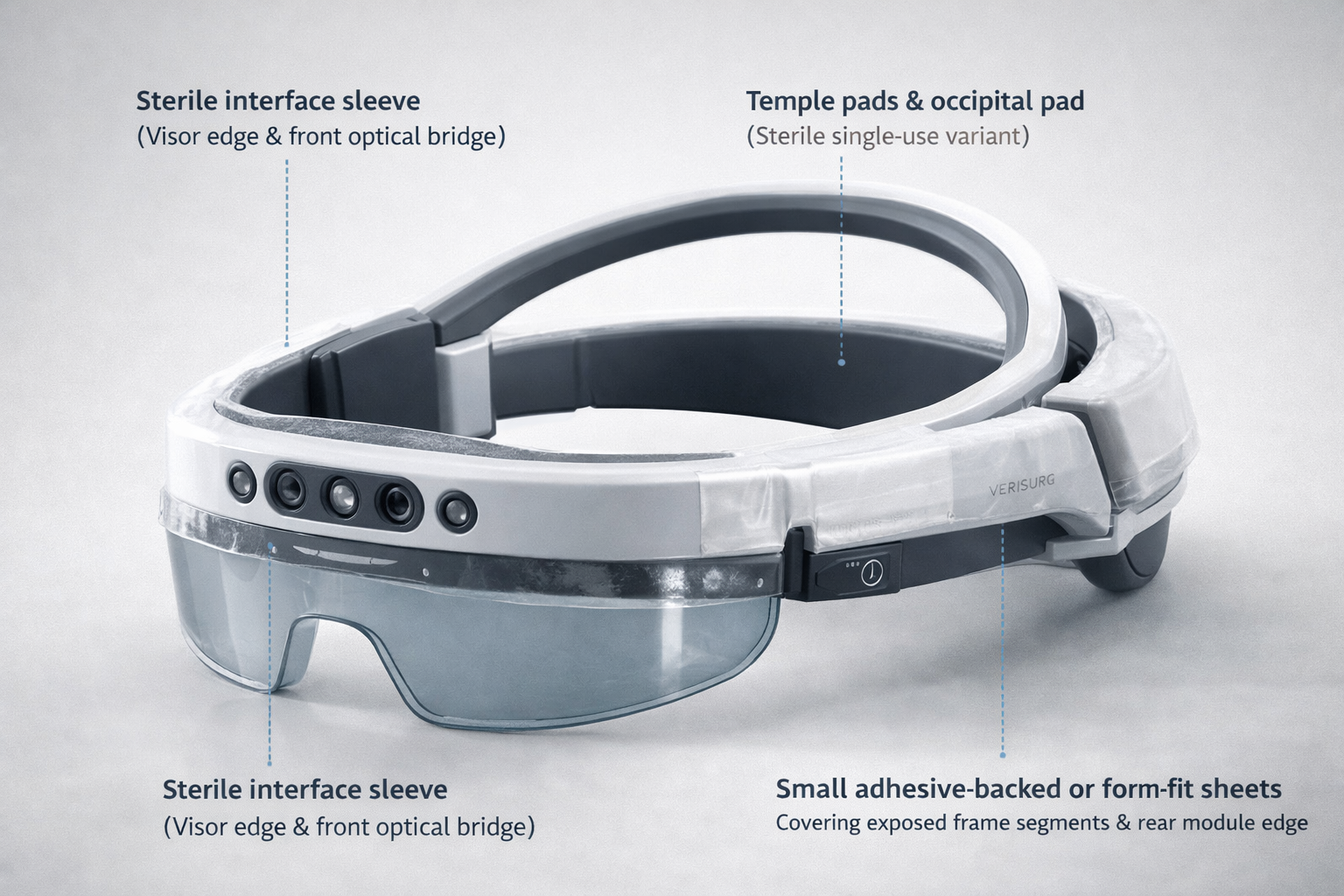
Sterile workflow architecture concept: reusable hardware, sterile interfaces, and packaging-guided application